
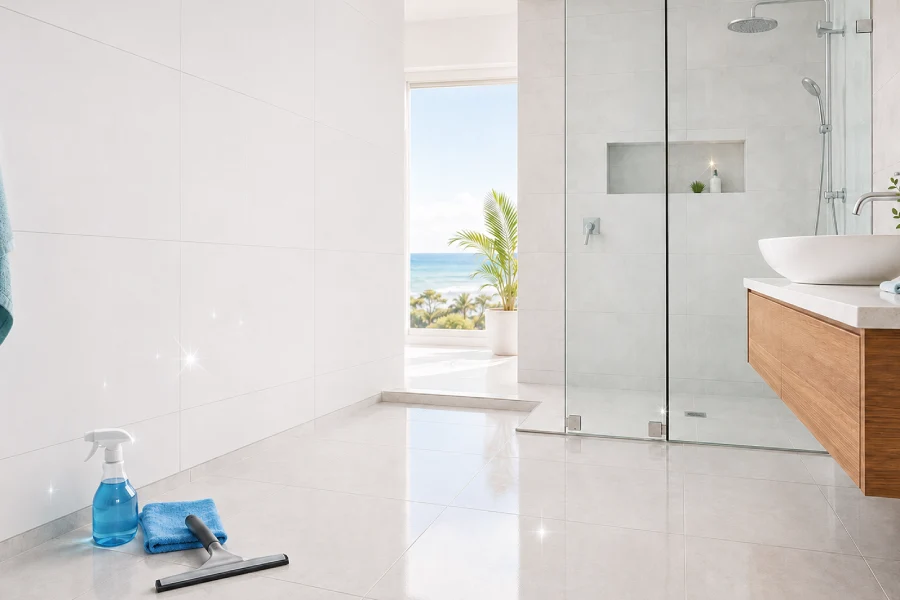
Bathroom tiles deal with moisture, soap residue, body oils and everyday dirt. In Australian homes, warm temperatures, high humidity and limited bathroom ventilation can also encourage mould and mildew to develop around grout lines, shower corners and silicone seals.
Regular cleaning helps maintain the appearance of your tiles, reduces slippery residue and prevents minor stains from becoming difficult to remove. However, the right cleaning method depends on the tile material, grout condition and type of buildup.
Identify Your Bathroom Tile Type Before Cleaning
Not every cleaning product is suitable for every tile. Using a strong chemical or abrasive tool on the wrong surface may cause scratching, dullness or permanent staining.
| Tile Type | Recommended Cleaning Approach | What to Avoid |
|---|---|---|
| Ceramic tiles | Warm water and a mild, pH-neutral cleaner | Highly abrasive powders and metal scourers |
| Porcelain tiles | Mild tile cleaner and a microfibre cloth or soft brush | Strong chemicals unless approved by the manufacturer |
| Natural stone tiles | Stone-safe, pH-neutral cleaning products | Vinegar, lemon juice and acidic cleaners |
| Glass tiles | Non-abrasive cleaner and a soft microfibre cloth | Rough brushes and abrasive pads |
| Terracotta tiles | Cleaner designed for sealed terracotta surfaces | Excess water, acidic products and harsh degreasers |
| Textured tiles | Mild cleaner applied with a soft-bristled brush | Hard metal brushes that may damage the finish |
| Grout | Grout-safe cleaner and a small nylon brush | Excessive scrubbing with stiff or metal brushes |
If you are unsure about the tile material, test the cleaning product in a small and inconspicuous area first.
Essential Bathroom Tile Cleaning Supplies
You do not need a cupboard full of products to keep bathroom tiles clean. A few suitable tools can handle most routine cleaning tasks.
Useful supplies include:
- A pH-neutral bathroom or tile cleaner
- Microfibre cloths
- A non-abrasive sponge
- A soft-bristled cleaning brush
- A small nylon grout brush
- A mop suitable for tiled floors
- A bucket of clean water
- A squeegee
- Rubber gloves
- Dry towels or cloths
- A stone-safe cleaner for natural stone surfaces
Always read the product label before use. Follow the recommended dilution, ventilation and surface-suitability instructions.
How to Clean Bathroom Wall Tiles
Start by removing toiletries and other items from the area. Dust or wipe away loose hair and debris before applying moisture.
- Run a warm shower briefly to loosen surface residue.
- Apply a suitable bathroom tile cleaner according to the label.
- Allow the product to remain on the surface for the recommended contact time.
- Gently agitate the tiles with a non-abrasive sponge or soft brush.
- Pay additional attention to corners and areas around fittings.
- Rinse the tiles thoroughly with clean water.
- Dry the surface with a microfibre cloth to minimise streaks and water marks.
Avoid allowing cleaning products to dry on the tiles, as this may leave a sticky film or visible residue.
How to Clean Bathroom Floor Tiles
Begin by vacuuming or sweeping the floor, including around the vanity, behind the door and along skirting edges. Use a vacuum head that will not scratch the tiles.
Next, mop the floor with warm water and a suitable tile cleaner. Work from the furthest corner towards the doorway so that you do not walk over the freshly cleaned surface.
For a better result:
- Use only the recommended amount of cleaning solution
- Change the water if it becomes visibly dirty
- Gently scrub textured or non-slip tiles with a soft brush
- Rinse the floor if required by the product instructions
- Dry the floor or allow sufficient ventilation
- Keep people and pets away until the surface is completely dry
Using too much detergent can leave a film that attracts more dirt and may make the floor feel slippery.
How to Remove Soap Scum from Bathroom Tiles
Soap scum is created when soap ingredients combine with minerals in water. It is especially common on shower tiles, glass screens and areas close to taps.
Apply a tile-safe soap-scum remover and allow it to work for the period stated on the label. Gently wipe or scrub the surface before rinsing thoroughly.
For light buildup on ceramic or porcelain tiles, a mild solution of warm water and dishwashing liquid may be sufficient. However, dishwashing liquid should be used sparingly because excess detergent can create additional residue.
Persistent soap scum may require more than one treatment. Repeated gentle cleaning is generally safer than aggressive scrubbing that could damage the tile finish.
How to Clean Bathroom Grout
- Apply a grout-safe cleaning product
- Leave it on for the recommended contact time
- Scrub gently with a small nylon brush
- Work on one section at a time
- Rinse away the loosened dirt
- Dry the area with a clean cloth
- Repeat the process if staining remains
Avoid applying excessive pressure. Aggressive scrubbing can gradually wear down grout, particularly if it is old, cracked or already loose.
Dark or discoloured grout is not always caused by surface dirt. Permanent staining, moisture penetration or deterioration may require professional assessment, regrouting or resealing.
How to Remove Mould from Bathroom Tiles and Grout
- Open windows and use the exhaust fan
- Wear gloves and follow the cleaner’s safety directions
- Apply a product approved for the relevant tile and grout
- Allow the correct contact time
- Gently clean the affected area
- Rinse if required
- Dry the surface thoroughly
- Wash or dispose of used cloths appropriately
Never mix bleach with vinegar, ammonia, acids or other cleaning chemicals. Combining household cleaners can release dangerous gases.
If mould covers a large area, returns quickly or appears to extend behind tiles, walls or cabinetry, professional mould remediation may be necessary. The source of the moisture should also be investigated.
Avoid These Common Bathroom Tile Cleaning Mistakes
Using Too Much Cleaning Product
Additional detergent does not necessarily provide a deeper clean. Excess product can leave a sticky film that attracts dirt and makes tiles appear dull.
Scrubbing with Harsh Tools
Steel wool, metal brushes and rough scourers may scratch tiles, damage grout and wear away protective coatings.
Using Vinegar on Natural Stone
Vinegar is acidic and can etch marble, limestone, travertine and other calcium-based stone.
Ignoring Product Contact Time
Wiping a cleaner away immediately may prevent it from working properly. Leaving it on for too long can also damage sensitive surfaces. Follow the label directions.
Mixing Cleaning Chemicals
Never combine bleach with ammonia, vinegar, acidic cleaners or other household chemicals. Use one product at a time and rinse the surface thoroughly before changing products.
Leaving Tiles Wet
Persistent moisture encourages mould growth and water spotting. Drying shower walls and improving ventilation can significantly reduce buildup.
Cleaning Tiles but Ignoring Grout
Grout lines often hold more dirt than the tile surface. Both areas should be cleaned to achieve a consistent result.
Tips for Cleaning Textured and Non-Slip Bathroom Tiles
Textured tiles can provide improved grip, but their uneven surface may trap more dirt and cleaning residue than smooth tiles.
A flat mop may pass over the raised areas without reaching the small grooves. Use a soft-bristled brush to gently agitate the surface.
Clean textured tiles in small sections and rinse carefully. Residual detergent can remain in the texture, creating dull patches or increasing slipperiness when the floor becomes wet.
How to Keep Bathroom Tiles Cleaner for Longer
Preventive maintenance is easier than removing months of accumulated soap scum and grime.
- Use a squeegee on shower tiles after use
- Wipe water from ledges and corners
- Run the exhaust fan during showers and afterwards
- Open windows when weather and security conditions permit
- Wash bathmats regularly
- Avoid storing leaking bottles directly on tiled ledges
- Remove hair from the floor and drain frequently
- Attend to damaged grout or silicone seals promptly
- Clean small spills before they dry
- Complete a light weekly clean
- Arrange periodic deep cleaning when buildup becomes difficult to remove
In humid parts of Australia, ventilation and drying are particularly important. In drier regions, mineral deposits may be a more noticeable concern depending on the local water supply.
A Practical Bathroom Tile Cleaning Schedule
| Frequency | Recommended Task | Why It Matters |
|---|---|---|
| After each shower | Squeegee wet tiles and remove pooled water | Reduces water marks, soap scum and excess moisture |
| Several times a week | Run the exhaust fan, remove hair and wipe frequently wet areas | Helps control humidity and prevents dirt from accumulating |
| Weekly | Clean wall tiles, floor tiles, fixtures and light grout buildup | Keeps everyday grime, soap residue and bathroom odours under control |
| Fortnightly | Inspect corners, silicone seals and grout for mould or staining | Allows early treatment before mould and stains become difficult to remove |
| Monthly | Deep-clean grout lines, floor edges and difficult-to-reach areas | Removes embedded grime that routine cleaning may miss |
| Every few months | Check grout, sealant and tile condition for cracks or deterioration | Helps identify maintenance issues that may allow moisture to penetrate |
| As needed | Arrange professional cleaning for heavy buildup, staining or neglected tiles | Provides a deeper clean when household methods are no longer effective |
The ideal schedule will depend on how many people use the bathroom, the quality of ventilation and how quickly residue develops.
Bathroom Ventilation and Moisture Control
Cleaning alone will not prevent mould if the bathroom remains damp for extended periods.
Use the exhaust fan whenever the shower or bath is running. Keep it operating after use long enough to help clear lingering humidity. If the bathroom has a window, opening it may improve airflow when conditions allow.
- The exhaust fan is clean and operating correctly
- Wet towels are hung where they can dry
- Water is not leaking around taps or shower fittings
- Grout and silicone seals are intact
- Water drains correctly instead of pooling
- Bathroom doors and windows are used to improve airflow where practical
Recurring dampness, swollen cabinetry, peeling paint or persistent musty odours may indicate a hidden leak or inadequate ventilation.
Are Steam Cleaners Safe for Bathroom Tiles?
Steam can loosen grime without relying heavily on cleaning chemicals, but it is not suitable for every bathroom surface.
High heat and pressure may affect loose grout, damaged seals, natural stone coatings or poorly installed tiles. Directing concentrated steam into cracks can also force moisture behind the tiled surface.
- Review the tile manufacturer’s instructions
- Check the condition of the grout and seals
- Use the correct attachment and pressure setting
- Avoid prolonged heat on one spot
- Keep steam away from electrical fittings
- Test a small area first
If the grout is cracked or tiles are loose, repair may be needed before steam cleaning.
When to Consider Professional Bathroom Tile Cleaning
Routine household cleaning is suitable for general maintenance, but some bathrooms require specialised equipment and professional-grade products. Professional tile and grout cleaning may be helpful when:
- Grout remains dark after routine cleaning
- Soap scum covers a large shower area
- Textured tiles continue to look dirty
- The floor feels sticky after mopping
- Mineral deposits are difficult to remove
- Previous products have left heavy residue
- You are preparing a rental property for inspection
- Tiles need cleaning before grout sealing
- The bathroom has not been deep-cleaned for a long time
- You are unsure which products are safe for the surface
A professional cleaner can assess the tile material, select an appropriate cleaning method and target embedded residue without relying on unnecessarily harsh treatment.
Frequently Asked Questions About Bathroom Tile Cleaning
How often should bathroom tiles be cleaned?
Most bathrooms benefit from a light weekly clean. Frequently used family bathrooms may need attention more often, especially around shower floors, grout lines and wet corners.
What is the best cleaner for bathroom tiles?
A pH-neutral cleaner that is approved for the specific tile material is generally suitable for routine cleaning. Natural stone requires a dedicated stone-safe product.
Why do my bathroom tiles still look cloudy after cleaning?
Cloudiness may be caused by soap scum, hard-water deposits or cleaning-product residue. Using too much detergent or failing to rinse properly can also leave tiles looking dull.
Can I use vinegar to clean bathroom tiles?
Vinegar may be suitable for limited use on certain acid-resistant surfaces, but it can damage natural stone, grout and some finishes. Check the surface-care instructions before using it.
How can I stop mould from returning?
Improve ventilation, dry wet surfaces, repair leaks and regularly clean areas where moisture collects. Persistent mould may indicate a deeper moisture issue that requires professional investigation.
Why does my bathroom floor feel slippery after mopping?
The floor may have soap, body oil or cleaning-product residue on it. Clean it again using the correct product dilution, rinse thoroughly and allow it to dry completely.
Can permanently stained grout be restored?
Some stains can be reduced through deep cleaning, but severely discoloured or damaged grout may need recolouring, sealing or replacement.
Related Posts:
- How Can Perth Homeowners Know If Their Tile Floors Need Deep Cleaning?
- Why DIY Carpet Cleaning Machines Don’t Always Work
- How to Maintain Upholstered Furniture After Cleaning
- Rug Cleaning Tips for High-Traffic Areas in Australian Homes
Author Bio:
Perth Cleaning Team shares practical advice on professional carpet, rug, upholstery, mattress, tile and grout cleaning. Our content helps Perth homeowners and businesses maintain cleaner, healthier and better-looking floors and indoor spaces.